

Bergen op Zoom
Pioneering with a hydrogen drilling
A next important step in making construction projects more sustainable
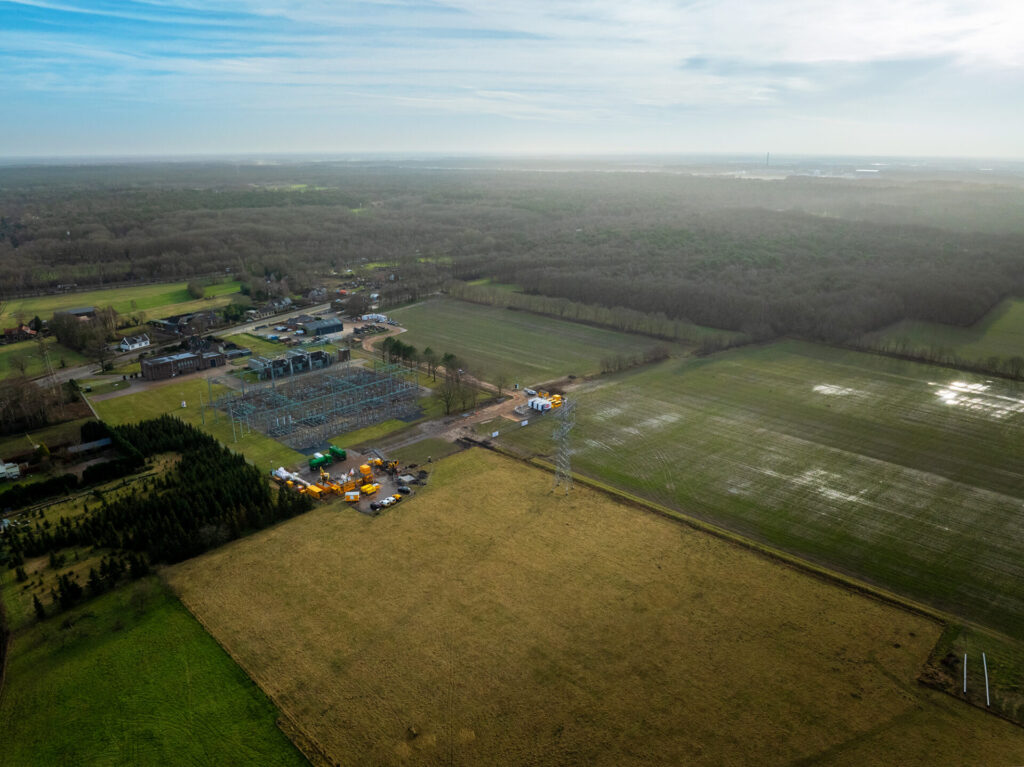
The cable from the Woensdrecht electricity station to Bergen op Zoom strengthens the electricity grid in the region. With this innovative pilot, TenneT and A.Hak are taking another important step in making their construction projects more sustainable.
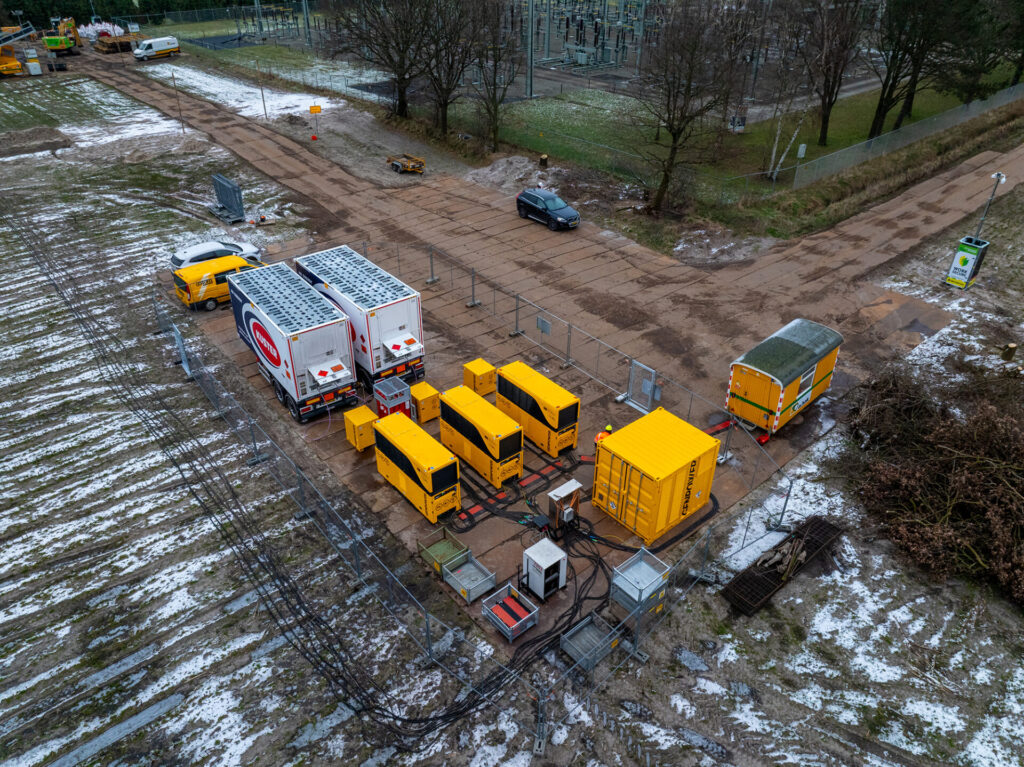
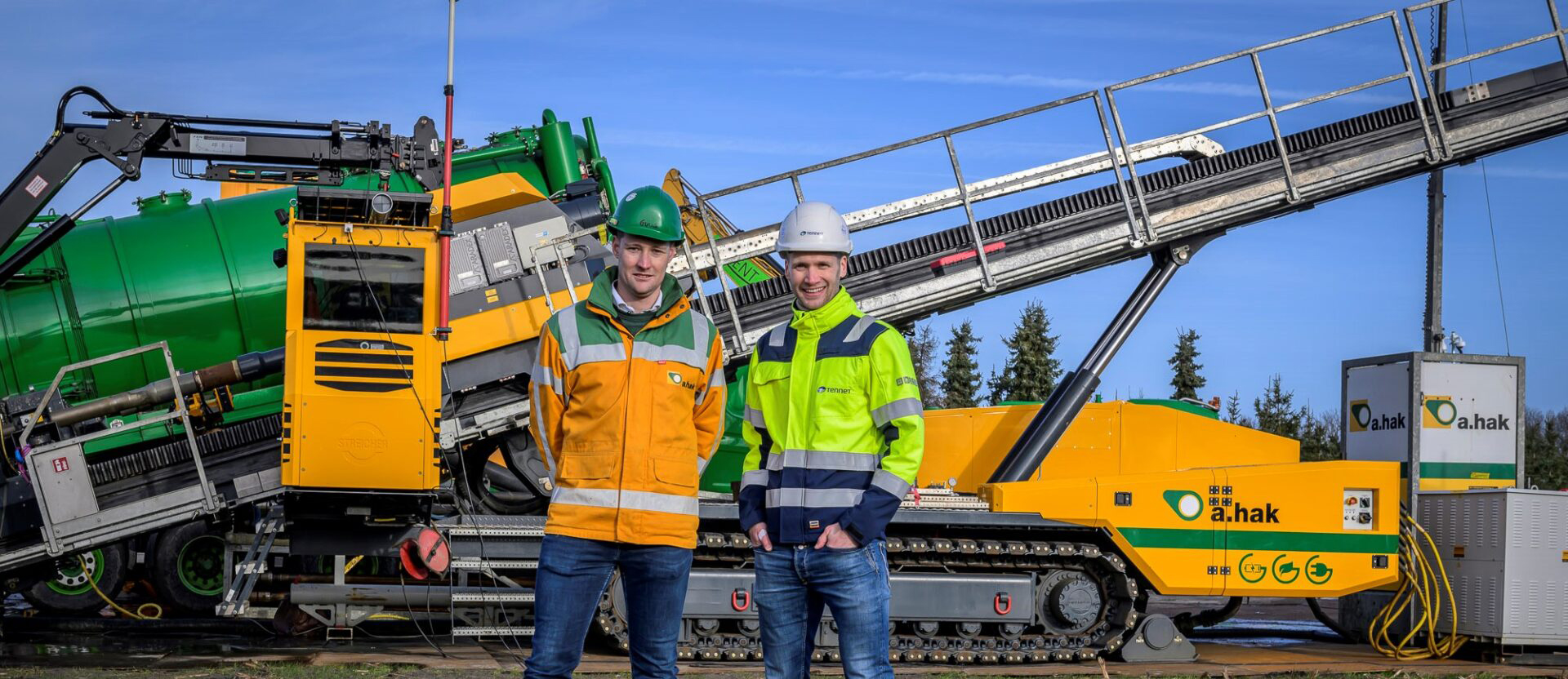
Guus Scheren, A.Hak’s final responsible for directional drilling, explains how this approach works in practice. “The sustainability challenge has stimulated us to come up with new solutions together with our client TenneT. For example, there are three hydrogen generators on this project, which we couldn’t have imagined until recently. Working with hydrogen seemed really far away in our directional drilling operations. Once we were able to connect the generators to a battery, this innovative method turned out to be possible after all. By drilling without emissions, only filtered air and water are released, and we have no nitrogen or CO2 emissions.”
Clean and emission-free construction
Because this project is located near Natura2000 areas, nitrogen emissions seemed to ensure that the work would come to a halt. Due to continuous efforts to reduce nitrogen emissions, this final part of the project could still proceed.
Ruud Meeuwissen, project manager at TenneT, says: “We all play an essential role in the Dutch energy transition, and TenneT also wants to carry out projects as sustainably and cleanly as possible. For this reason, we work together with A.Hak under the ‘Clean and Emission-free Construction’ covenant. This covenant is about making our construction projects more sustainable, which can be done through the use of emission-free equipment, such as electric drilling powered by hydrogen aggregates. Together, we are taking big steps in practice, and that’s great, isn’t it!”
Important lessons for the future
The pilot in Bergen op Zoom contributes to the learning process about emission-free and low-emission work. TenneT and its partners are jointly exploring the preconditions and challenges in this area. For example, consider the – still limited – availability of green hydrogen. TenneT emphasizes the commitment to deploy low-emission or even emission-free equipment on multiple projects in the coming years.
What does it bring us?
- Continuation and completion of the project
- Protection of vulnerable natural areas
- Contribution to climate goals
- Improved working conditions, use of hydrogen is quiet & without diesel engine emissions
- Limiting disturbance to the environment
- Supply chain collaboration and knowledge sharing in the sector
- Sustainable connection
How does hydrogen drilling work?
The principle in hydrogen drilling is that the hydrogen generator supplies directly to the drilling rig. During higher power demand, the battery pack supplements, and during lower power demand, the battery pack is recharged. The collaborations on this project are with Kuster and Holthauzen for green hydrogen and with Genpower for the hydrogen generator.
With this machine and this drilling, we are focusing on the future with a focus on safety, sustainability, and efficiency.