


Sliedrecht
Team effort ensures flawless pull-in operation
Pull-in operation of the 1200-meter steel-in-steel pipeline
Unstable soil layers, a complex stringing area, and a busy urban environment made the crossing of the Lower Merwede a ‘special’ project, says project manager Michiel Houdijk. “But if you really want something special, A.Hak can take you further.” On how a team effort led to a flawless pull-in operation in Sliedrecht.
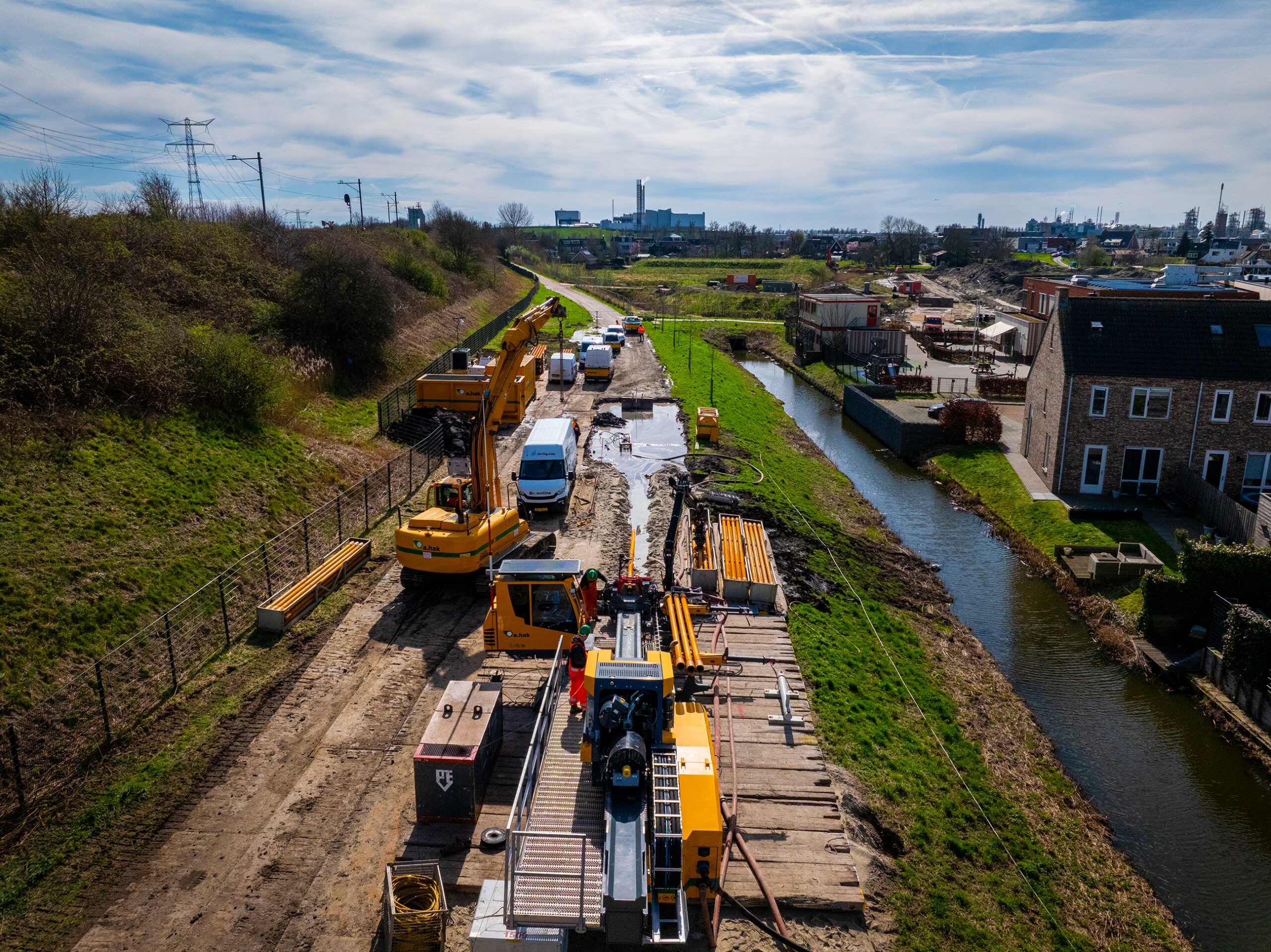
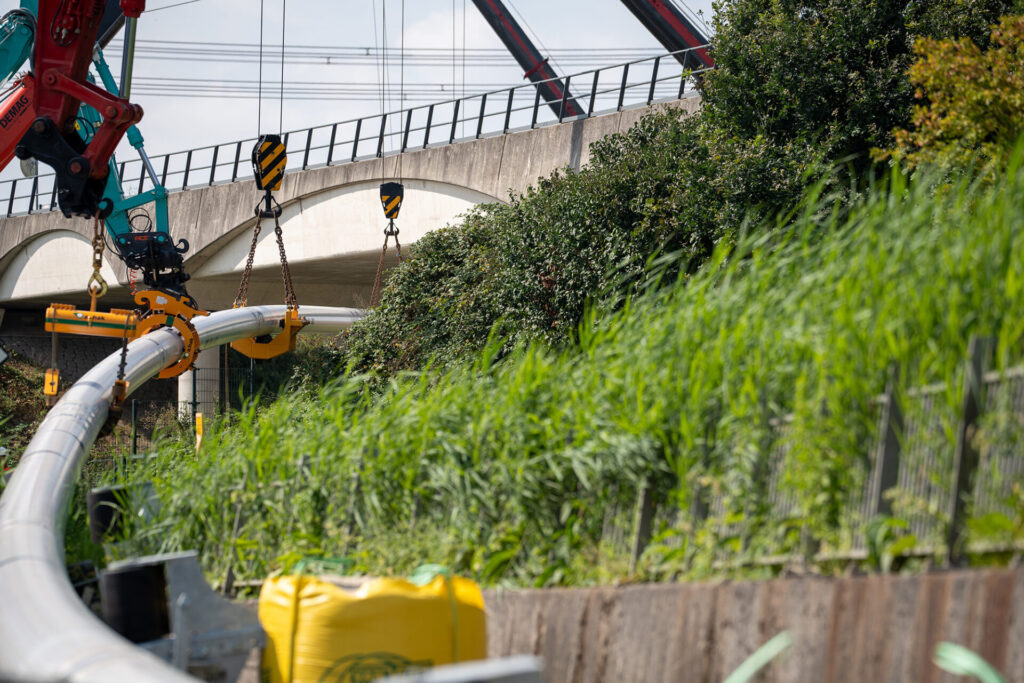
The pull-in operation of the 1200-meter steel-in-steel pipeline for client HVC attracted a lot of attention last summer. And rightly so. The stringing area alone, which ran from Sliedrecht station under the A15 and with an S-bend under the railway viaduct, was the result of a clever piece of engineering. Nineteen cranes were able to skillfully guide the pipe string to the exit point.
Less visible to the public was the dynamic surrounding the drilling itself, according to Michiel Houdijk, project manager at A.Hak. In a construction team together with HVC and engineering firm Rotterdam Engineering, A.Hak devised a design to realize a supply and return pipeline between the waste company in Dordrecht and the district heating network in Sliedrecht.
On the line
Two bores over 1,200 meters, with a distance of only 5 meters from each other. “The big question was: can we steer along the line we intended?” says Houdijk. “Because we not only had to deal with the crossing of the Lower Merwede, but also, for example, with the pillars of the railway bridge, hydraulic engineering works, a dike crossing with sheet piling, a waste heap, and private land.”
The drilling proceeded smoothly until the instability of the soil layers caused problems at the exit points. “The soil layers on the Sliedrecht side behaved differently than we could have expected. The area has a unique soil composition; every meter is different. We had accounted for potential mud breakouts in the final layers in the drilling design, but not for that instability.” The installation of sheet piling structures proved to be the solution after consultation with HVC and Rotterdam Engineering. “From that moment on, the bores were executed according to plan in one go.”
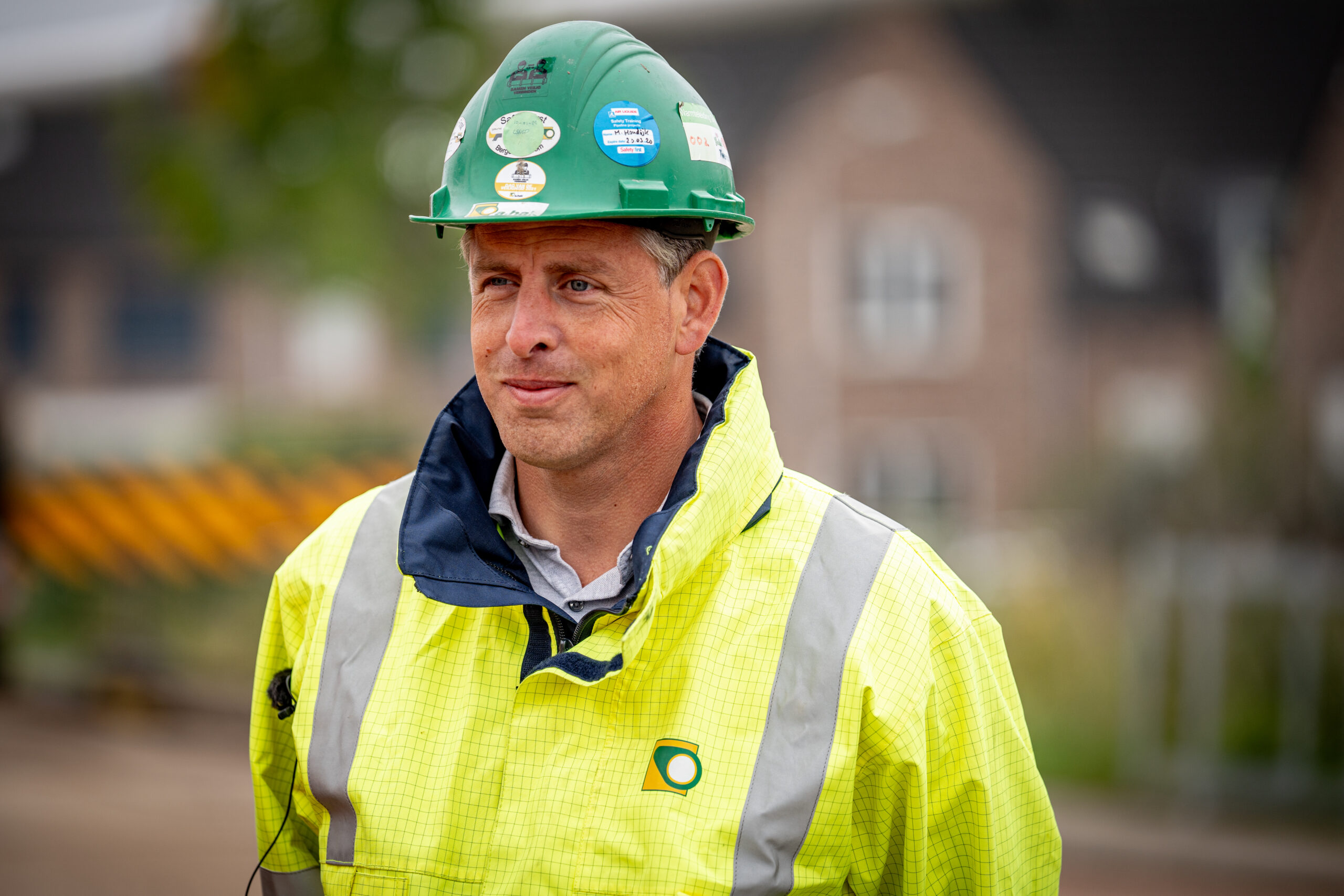
Michiel Houdijk is pleased with how HVC, De Omgevingsverbinder, and De Omleiding handled the stakeholder management:
“Despite there being quite a lot of inconvenience for the local community, we received many compliments for how everything was arranged. We truly did that as a team – client, contractor, and all other involved parties.
This team effort has led to the pull-in operation proceeding flawlessly. I think that together we managed to make a very complicated bore a success.”
Clamps
The challenge: the pull-in operations. The space to string out the pipe was limited, and because the maximum bending radius had already been reached, A.Hak had to devise a plan to get the pipe string to the exit point in a controlled manner – notably, under a railway viaduct. “That really made this project, together with the difficult bore, a special one,” Houdijk emphasizes. “Six variants were worked out before the correct stringing route was found.”
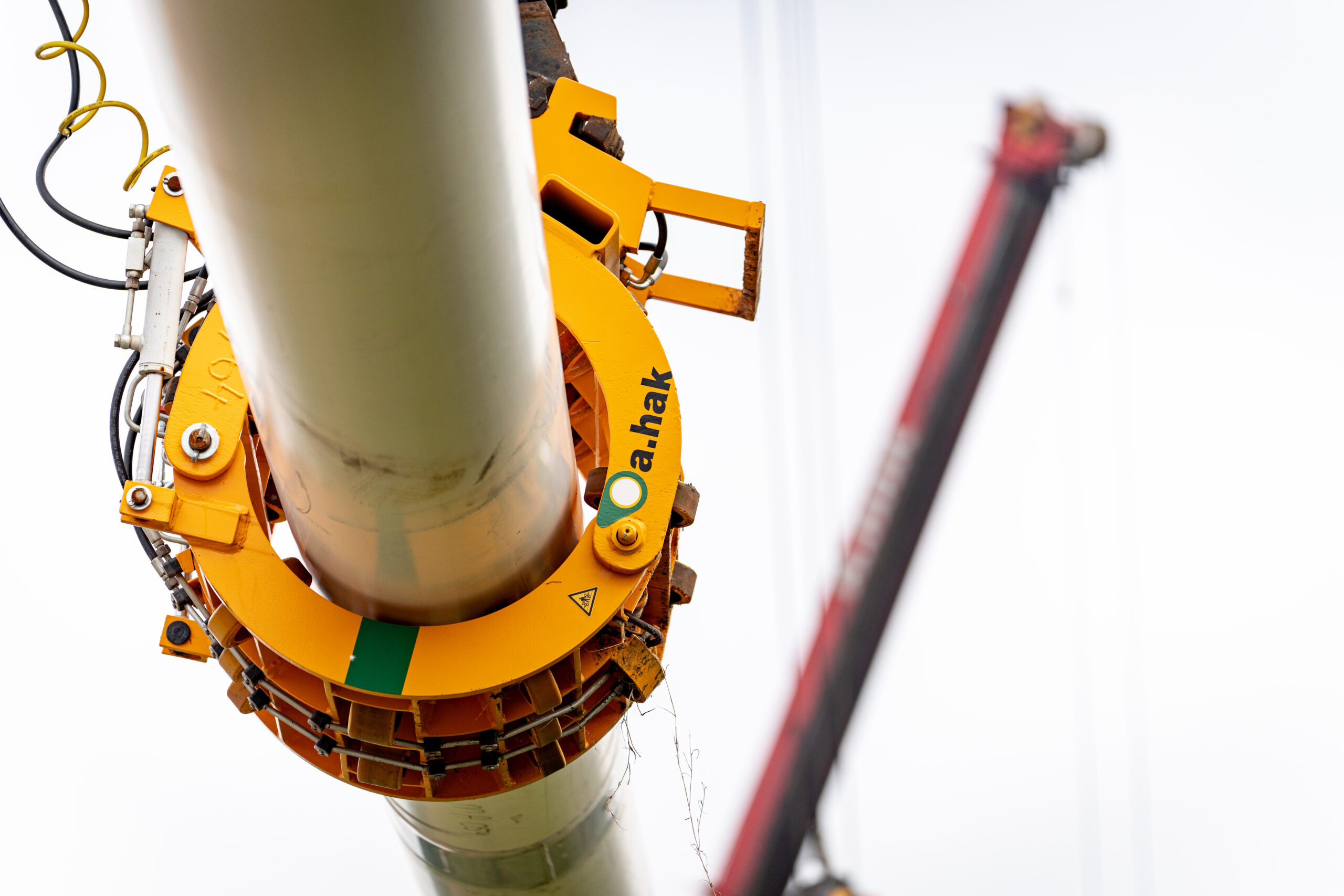
The answer: four crawler cranes equipped with special clamps, which ensured that the pipeline could not deviate during the pull-in and could calmly roll through to the exit point. “We designed and made the clamps ourselves,” says Houdijk, not without pride. “They are not available on the market, but we really needed them. Otherwise, we might not even have received permission from Prorail to pull in the pipeline. That is also typical A.Hak. If you really want something special, A.Hak can take you further.”
The project manager extends his compliments to A.Hak Transport, which already contributed ideas to the lifting plan during the construction team phase, and to the equipment department in Veendam, responsible for the production of the clamps. “It’s nice, of course, that someone invents those clamps, but they still have to be made.” Additionally, credits go to overall responsible Johan Capelle, Remco van Dorp, and Fedde Smit, who supervised the entire bore.


